
What Should You Do When Markets Hit All Time Highs?
Posted On Wednesday, Jun 28, 2017
It’s a topic of consternation for a lot of investors with savings these days: what do I do with my money now that markets are hitting new highs almost every day?
This question, among many others, will be discussed at the AMFI Mutual Fund Summit 2017 coming up tomorrow. While Quantum will not be speaking at the event (despite the fact that, if long term track records and disciplined research and investment philosophies are something to go by, our portfolio managers should be up there on stage! ?), we thought we should provide you with their views on this very crucial question!
But, first: If you are an investor in equities and you are worrying about that, then the first thing we want to say is: Congratulations! Investors as a whole tend to be greedy at market tops and fearful at market bottoms, so being fearful at a potential market top is exactly the way you should react as a thoughtful, intelligent investor! It means you have done your work as an investor and rather than patting yourself on the back about the gains in your portfolio, you are avoiding the blunder of making an emotional decision and, instead, wish to be rational about your financial future. That is an excellent achievement on its own. So kudos to you and to your financial advisor, if you have one, for making you think rationally rather than prepping to you act emotionally!
Now, back to the question...
We’ve been writing about this repeatedly every year, and it’s no different now: keep the long term in mind. Now, broad stroke answers are certainly not “one size fits all” – someone nearing retirement with an equity allocation that’s gotten way out of proportion to what’s appropriate for their age can and should consider outright redemption of equity funds to bring the portfolio weights back into a balance more in line with your age and risk profile. But, for investors, with a 10-20-30+ year horizon, then our advice is: relax. Stick with your long-term plan and, while there is a need to rebalance your portfolio and equity exposure – particularly if you have the small-cap and mid-cap equity funds – in general, were there to be a sharp decline in equity markets in the near future, you still have a 10 to 30 year time span to witness a recovery in share prices and in the NAV of the funds impacted by a decline. All that’s happened is that some portion of your expected long-term returns from being invested in equities seems to have accelerated into the present, which means that - at some point going forward - those returns should even out.
But neither you nor we know when that decline will be. It could be tomorrow. It could be six months from now. It could be six years from now. In any long-term allocation plan, attempting to time the market with wholesale moves in and out of certain asset classes is almost certainly a bad idea. There are some seasoned legendary professional investors who have managed that feat over time, but we can tell you they are few and far between. For the average, sit-at-home investor whose day job is something else entirely, we encourage you to stay the course and keep your long term plan in mind. Don’t get too excited about the gains you’ve already experienced, and you won’t be too disappointed when that point in the future is a reality where gains are a little harder to come by.
 Atul Kumar, Portfolio Manager of the Quantum Long Term Equity Fund:
“The BSE Sensex is at an all-time high, during an environment in which overall market earnings have been stagnant for the past 3 years. So, when there is no growth in earnings (E) and share prices are increasing (P), it results in a surge in the PE ratio. The multiples that investors are willing to pay for every rupee of earnings have been expanding in hope that there will be a sharp recovery in the Indian economy. This has not happened and there is little on the horizon – barring a great monsoon – to suggest there will be a sharp rebound in economic activity and in broad corporate earnings. The Indian economy is likely to see a slow grind and a natural recovery cycle rather than a reform-driven, government-induced new wave of growth.
With that in mind, investors should refrain from allocating large lump sum amounts to equities. However, they should continue with SIPs. They can also add modestly to equities if they are underinvested compared to their target allocation as worked out with their IFAs.
Our equity funds are sitting on about 14% cash as of May 31st. Any correction in stocks is likely to make us rush to purchase them. A further surge in share prices without the accompanying growth in earnings is likely to make us reduce our equity holdings. Our process ensures that we raise cash at high market levels and deploy as soon as opportunity arises. As such, in a market decline, the cash we hold does not lose its value and cushions the downside of the NAV of the fund.”
 Chirag Mehta, Portfolio Manager of the Quantum Gold Fund, Quantum Equity Fund of Funds and Quantum Multi Asset Fund:
“Globally and in India, individual and institutional investors have been shrugging off most of the evident risks as they continue to chase stretched valuations in equity markets in search for returns given the backdrop of ample liquidity floating around. In the “risk-on” environment of the market touching new highs every week, gold has naturally not done well and has not been on investors’ radar screens. It seems that governments are determined to create an aura of confidence in the financial markets with a view to dissuade any movement of money to “distress” and “gloom” assets such as gold.
However, an allocation to gold is a must; risks can suddenly come to the fore and change the course of asset markets, quickly leaving investors scrambling for exits. As we have seen previously in a “risk-off” environment during Jan- Feb 2016 and also after September 2008, gold has proven itself as an effective portfolio diversification tool during most of the times of elevated risks and ensuing uncertainty. In current times, when economic and geopolitical risks are being completely ignored by the markets, we believe that it is imperative to have an allocation to gold.”
 Pankaj Pathak, Portfolio Manager of the Quantum Dynamic Bond Fund:
“It has been a significant run in the bond markets since August 2013, with Indian bonds returning double digits as interest rates on Indian government bonds have declined from over 8% to just above 6%. Having said that, investors would be well advised to lower their return expectations from bond funds as capital gains may not be the main driver of returns going forward. While the Dynamic Bond Fund has the flexibility to manage the risks of interest rate movements, investors should still consider the possibility of capital loss from longer maturity bond funds post the sharp rally in the NAVs of bond funds. The purpose of an allocation to debt funds for many retail investors should be to provide liquidity and stability to their overall portfolio. For investors committing to an SIP in an equity fund, the most appropriate strategy may be to park the full, desired equity allocation in a liquid fund and initiate a Systematic Transfer Plan which sweeps your money into an equity fund on a regular basis – and gives you the full power to change this STP should your circumstances and objectives change.”
In summary, then:
1) Equity markets are at unrealistically high levels,
2) Gold is low,
3) Bond funds have had a great benefit from declining interest rates and, in our opinion, should not be a large part of a retail investor’s portfolio.
While it may be inadvisable to dump lump-sum amounts into markets at expensive levels, a rebalance of your portfolio may be needed. A systematic investment plan into an equity fund of a fixed rupee amount can do some of the balancing for you: it naturally buys fewer units at high market levels when the NAV is high and more units at lower market levels when the NAV is low. In other words, it is greedy when others are fearful and fearful when others are greedy. (We know we say that a lot, but it doesn’t make it any less true!) Further, if you’re in a position in which you’ve missed out on the equity rally and wish to start investing in equity markets and do have a lump sum you wish to invest, you could always consider more of an in-between approach of an STP.
And, like many, if you really don’t want to worry about what to do in each of these broad assets classes of equity, gold, and fixed income and are looking for returns that may be higher than a very safe but very low return fixed deposit, consider investing in the Quantum Multi-Asset Fund, with its mix of equity, debt, and gold. Let the experienced fund managers work for you while you continue to flip the TV channels hoping to find something sensible to watch! Good luck on that! ?
| Name of the Scheme | This product is suitable for investors who are seeking* | Riskometer |
| Quantum Long Term Equity Fund (An open-ended equity scheme) | • Long term capital appreciation • Investments in equity and equity related securities of companies in S&P BSE 200 index |  Investors understand that their principal will be at Moderately High Risk |
| Quantum Equity Fund of Funds (An Open-ended Equity Fund of Funds Scheme) | • Long term capital appreciation • Investments in portfolio of open-ended diversified equity schemes of mutual funds registered with SEBI whose underlying investments are in equity and equity related securities of diversified companies | |
| Quantum Multi Asset Fund (An Open-ended Fund of Funds Scheme) | • Long term capital appreciation and current income • Investments in portfolio of schemes of Quantum Mutual Fund whose underlying investments are in equity and equity related securities of companies, debt and money market instruments and physical gold | |
| Quantum Gold Fund ETF (An Open-ended Exchange Traded Fund- Gold) | • Long term returns • Investments in physical gold | |
| Quantum Dynamic Bond Fund (An Open-ended Debt Scheme with Defined Credit Exposure and Dynamic Maturity Profile) | • Regular income over short to medium term and capital appreciation • Investment in Debt / Money Market Instruments / Government Securities | 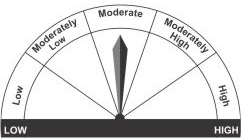 Investors understand that their principal will be at Moderate Risk |
* Investors should consult their financial advisers if in doubt about whether the product is suitable for them.
Disclaimer, Statutory Details & Risk Factors:
The views expressed here in this article are for general information and reading purpose only and do not constitute any guidelines and recommendations on any course of action to be followed by the reader. Quantum AMC / Quantum Mutual Fund is not guaranteeing / offering / communicating any indicative yield on investments made in the scheme(s). The views are not meant to serve as a professional guide / investment advice / intended to be an offer or solicitation for the purchase or sale of any financial product or instrument or mutual fund units for the reader. The article has been prepared on the basis of publicly available information, internally developed data and other sources believed to be reliable. Whilst no action has been solicited based upon the information provided herein, due care has been taken to ensure that the facts are accurate and views given are fair and reasonable as on date. Readers of this article should rely on information/data arising out of their own investigations and advised to seek independent professional advice and arrive at an informed decision before making any investments.
Mutual fund investments are subject to market risks read all scheme related documents carefully.
Please visit – www.QuantumMF.com to read scheme specific risk factors. Investors in the Scheme(s) are not being offered a guaranteed or assured rate of return and there can be no assurance that the schemes objective will be achieved and the NAV of the scheme(s) may go up and down depending upon the factors and forces affecting securities market. Investment in mutual fund units involves investment risk such as trading volumes, settlement risk, liquidity risk, default risk including possible loss of capital. Past performance of the sponsor / AMC / Mutual Fund does not indicate the future performance of the Scheme(s). Statutory Details: Quantum Mutual Fund (the Fund) has been constituted as a Trust under the Indian Trusts Act, 1882. Sponsor: Quantum Advisors Private Limited. (liability of Sponsor limited to Rs. 1,00,000/-) Trustee: Quantum Trustee Company Private Limited. Investment Manager: Quantum Asset Management Company Private Limited. The Sponsor, Trustee and Investment Manager are incorporated under the Companies Act, 1956.

View All
Related Posts
-
Invest without Stress - With Quantum Mutual Fund!
Posted On Monday, May 09, 2022
Since inception, Quantum AMC has stayed true to its Vision and Mission.
Read More -

Active or Passive Investing: Which Style is Right for You?
Posted On Tuesday, Apr 26, 2022
With such a wide variety of investment avenues and styles, you may be confused as to which is the best for you.
Read More -

Stay Ahead of Inflation During These Uncertain Times
Posted On Wednesday, Apr 13, 2022
Inflation has been slowly but steadily eating into the savings of investors.
Read More