
Why U.S. Bond Markets Are Repricing Fiscal Risk and What It Means for India?
Posted On Monday, Aug 24, 2026

For much of the post-Global Financial Crisis period, movements in U.S. Treasury yields were largely interpreted through the lens of monetary policy. Investors focused on the Federal Reserve's reaction function - how it would respond to evolving growth, inflation and labour market conditions - and bond yields reacted accordingly.
While those factors continue to remain important, the recent rise in long-dated U.S. Treasury yields suggests that the market's focus may be broadening...
The latest sell-off in the long end of the Treasury curve does not appear to be driven solely by concerns around inflation or expectations of future Fed policy. Instead, investors may be increasingly demanding compensation for a different set of risks like rising fiscal deficits, elevated government borrowing requirements, growing debt-servicing costs, and uncertainty around the long-term supply-demand balance for U.S. government debt.
Put differently, the debate in bond markets is gradually shifting from "Where will the Fed take policy rates?" to "What level of yield is required to finance an expanding stock of government debt?" The answer to that question may help explain why long-term Treasury yields have remained elevated even as inflation expectations have stayed relatively contained and the Federal Reserve has stepped away from actively shrinking its balance sheet.
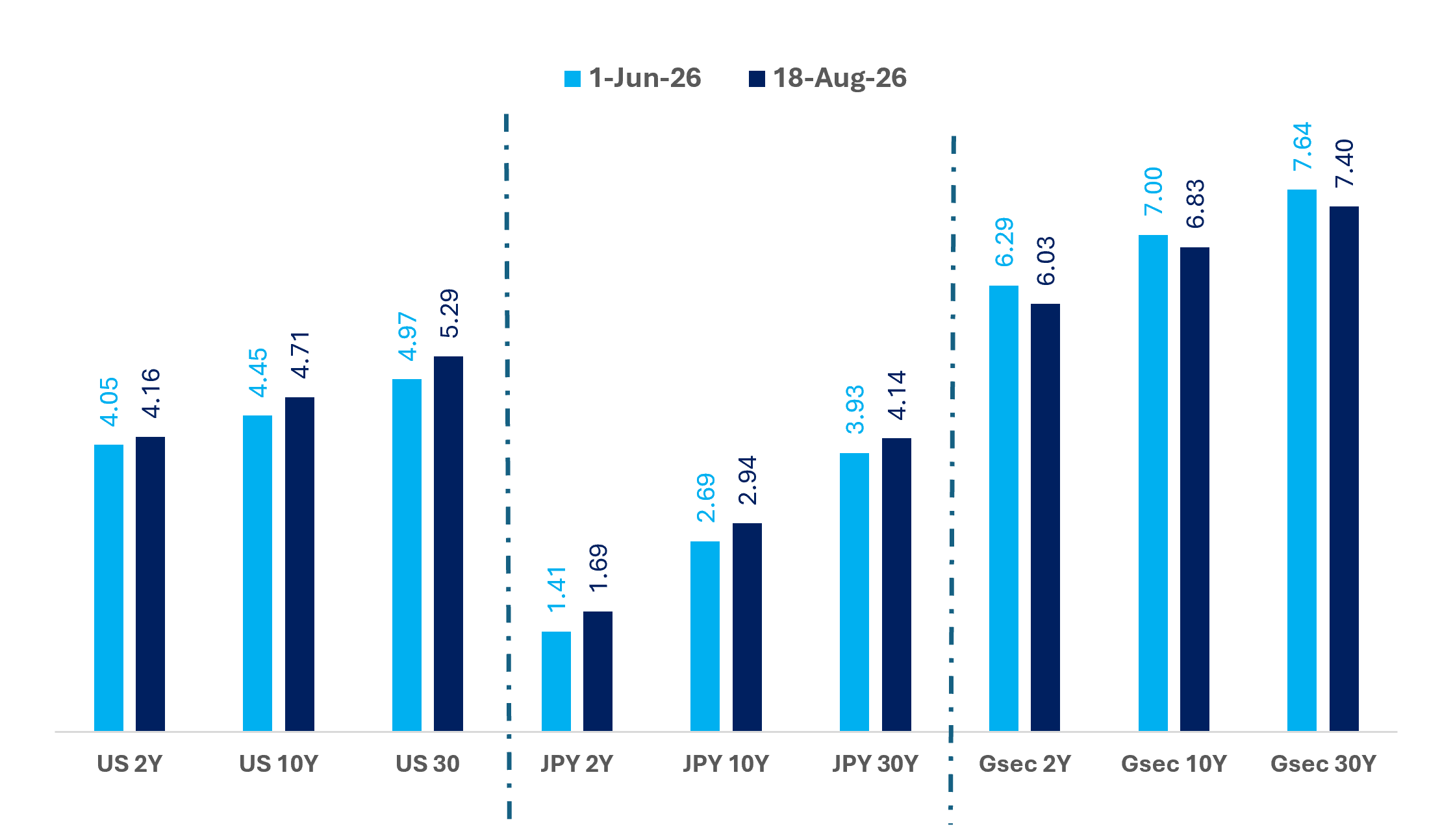
Chart I: Global Yield Repricing: Long-End Yields Rise Across the U.S. and Japan, While Indian Bonds Remain Relatively Anchored
Quantum AMC Graphics. Data Source: Bloomberg. Data as on June 01, 2026 and August 18, 2026
However, the recent rise in long-term U.S. Treasury yields is not merely a reflection of inflation fears or expectations of future Fed policy. Instead, the bond market appears to be asking a more fundamental question:
Who will finance America's growing debt burden, and at what price?
That question lies at the heart of the sharp repricing witnessed in the long end of the U.S. Treasury curve.
The 30-year Treasury yield recently climbed above 5.3%1, its highest level in nearly two decades, while the 10-year yield moved towards 4.7%1. What is notable is that this move occurred despite inflation expectations remaining relatively stable and despite the Federal Reserve no longer actively shrinking its Treasury holdings.
In other words, the market was not reacting to inflation alone.
It was reacting to supply.
And more importantly, it was reacting to the possibility that investors may require a higher premium to absorb that supply.
The Rise of the Fiscal Risk Premium
For much of the post-Global Financial Crisis era, investors rarely paid attention to fiscal risks when assessing U.S. Treasury valuations. Inflation remained subdued, central banks maintained highly accommodative policies, and global savings comfortably absorbed rising government debt issuance.
As a result, term premia remained compressed and long-term yields were largely anchored by expectations around growth and monetary policy.
Today the backdrop looks very different
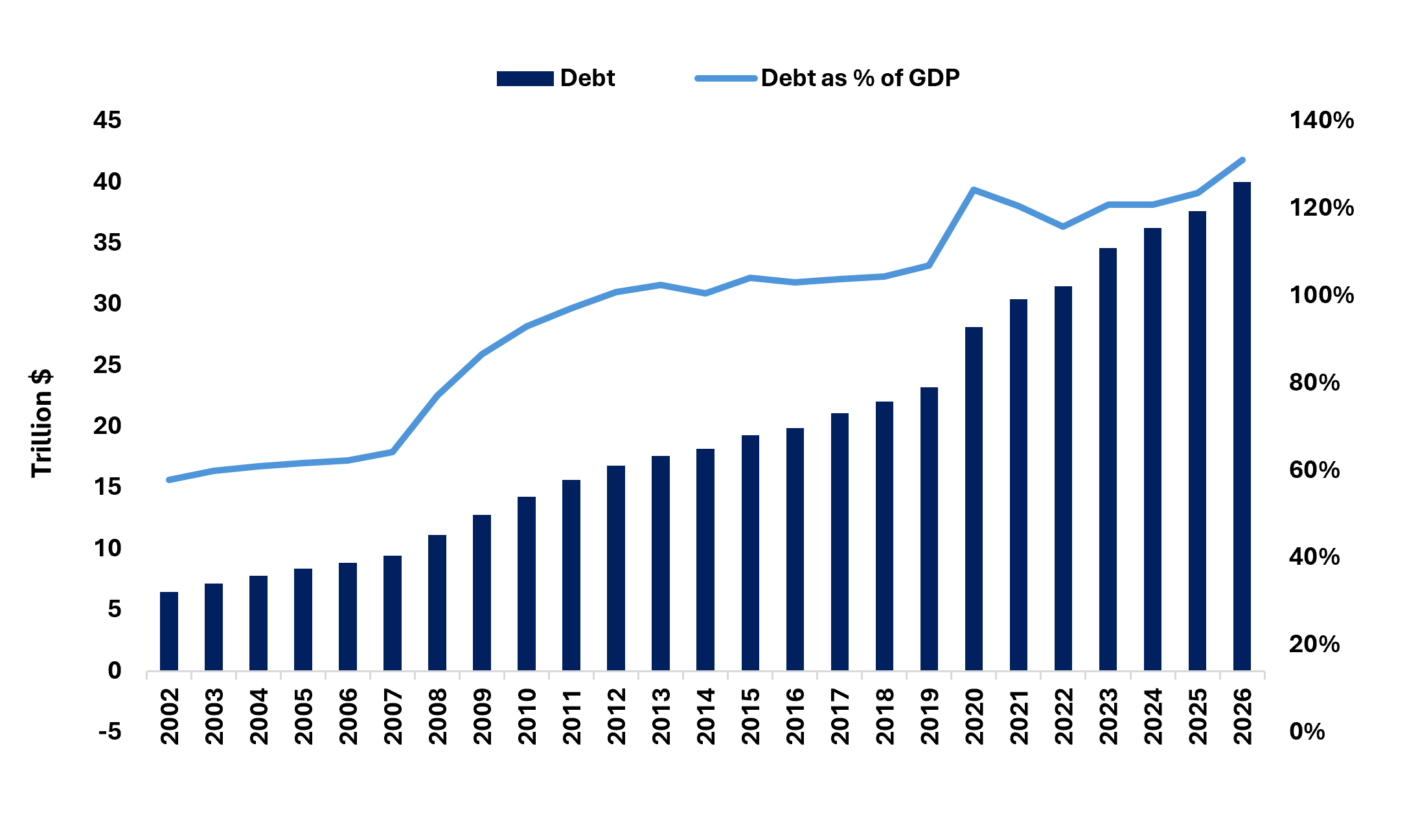
Chart II: U.S. Debt Burden: Persistently Rising Trend
Quantum AMC Graphics. Data Source: FRED. Data upto July 19, 2026
The U.S. government continues to run large fiscal deficits despite an economy that is neither in recession nor in crisis.
Treasury borrowing requirements remain elevated, with net marketable borrowing expected to remain in hundreds of billions of dollars every quarter.
At the same time, interest costs themselves are becoming a meaningful contributor to future deficits.
The U.S. government is increasingly borrowing not only to fund spending, but also to fund the interest expense on past borrowing.
That creates a feedback loop that bond markets are beginning to acknowledge.
Investors are no longer evaluating only the trajectory of inflation.
They are also evaluating the trajectory of debt.
And when debt becomes part of the conversation, long-term yields tend to behave differently.
It’s not Merely Inflation that the markets seem to be worried about...
One of the more telling aspects of the recent selloff in long-dated U.S. Treasuries is not what happened, but what did not happen.
Despite the sharp rise in long-term yields, Inflation expectations remained broadly anchored.
Market-implied inflation expectations continue to suggest confidence that inflation will eventually move closer to the Federal Reserve's long-term target.
So, if inflation expectations have not surged, why have long-term yields risen so sharply?
The answer appears to lie in real yields and term premium.
Investors today are demanding greater compensation for locking money away for thirty year bonds in an environment characterized by:
• Large fiscal deficits
• Elevated debt issuance
• Higher geopolitical uncertainty
• Persistent inflation volatility
• Questions around long-term fiscal sustainability
This additional compensation is precisely what we refer to as the “term premium”. For much of the last decade, term premium was close to zero or even negative.
Today it is re-emerging...
The Fed Is No Longer the Only Force Shaping the Bond Market
The recent selloff in long-dated U.S. Treasuries is notable because it has occurred even after the Federal Reserve stopped shrinking its balance sheet.
This suggests that the market's attention is gradually shifting from monetary policy towards fiscal dynamics. Investors are increasingly focused on the volume of debt that the U.S. Treasury must issue and whether demand can keep pace with that supply.
Put differently, the key question is no longer only where policy rates will settle, but at what yield investors are willing to finance an expanding stock of government debt.
Since private investors are more sensitive to valuation than central banks, higher debt issuance may require higher yields to attract sufficient demand.
The behaviour of the long end of the Treasury curve suggests that this repricing is already taking place.
Japan's Quiet Return Matters More Than Most Investors Realize
For years, Japan exported capital to the rest of the world.
With domestic yields close to zero, Japanese pension funds, insurers and banks became natural buyers of overseas bonds, including U.S. Treasuries. That dynamic helped suppress global yields.
Today, however, Japanese government bond yields are no longer negligible.
Thirty-year Japanese government bond yields are now above 4%2. For the first time in many years, Japanese investors have a meaningful domestic alternative.
So, this does not imply a mass exodus from U.S. Treasuries - but it does mean that every additional dollar invested abroad must pass through a higher sets of thresholds.
In bond markets, marginal flows can have a meaningful impact. Even a gradual reduction in overseas demand can influence pricing when issuance requirements remain elevated.
Japan therefore represents an important secondary force reinforcing the rise in global term premia.
What Does This Mean for Indian Bond Markets?
The immediate reaction is often to assume that rising U.S. yields must automatically translate into rising Indian yields.
But the reality is more nuanced...
India is not merely a passive recipient of global bond-market developments. Domestic fundamentals continue to matter.
The RBI has maintained a neutral policy stance, inflation remains substantially lower than the peaks witnessed in recent years, growth remains among the strongest globally, and structural demand for Indian government securities continues to improve.
That said, India cannot completely decouple from global duration markets.
When U.S. and Japanese long-term yields move higher, global investors reassess relative value across fixed-income markets.
The channels of transmission are familiar:
• Foreign portfolio flows
• Currency movements
• Crude oil prices
• Global risk sentiment
• Relative yield attractiveness
But the impact is often felt most acutely at the long end of the Indian yield curve.
This is why periods of sharp global bond-market volatility can temporarily interrupt an otherwise constructive domestic bond-market backdrop.
For investors - key takeaway is not whether the U.S. 30-year yield moves from 5.2% to 5.5% or something else - The bigger question is whether the world is entering a regime where long-term interest rates permanently incorporate a higher fiscal premium.
If that proves to be the case, bond investing globally may become less about anticipating the Fed’s next move and more about understanding the interaction between fiscal policy, debt supply, inflation and investor demand.
That represents a fundamentally different market environment from the one investors experienced during much of the last decade.
For Indian investors, such an environment argues for flexibility rather than rigidity.
The domestic fixed-income narrative remains constructive, but global volatility is unlikely to disappear immediately.
Duration opportunities will emerge and so will periods of volatility. The challenge is identifying which phase of the cycle the market is currently in.
Why Flexibility May Matter More:
The recent selloff in long-dated U.S. Treasuries is a reminder that bond markets are no longer responding exclusively to central-bank policy.
Fiscal realities are increasingly influencing pricing.
The world’s largest and most liquid bond market is effectively signalling that debt supply, funding requirements and fiscal sustainability now matter alongside inflation and growth.
For India, this is not necessarily a bearish development.
Domestic fundamentals remain supportive and Indian bond yields continue to offer an attractive carry advantage relative to many developed markets.
However, the path forward is unlikely to be linear.
Global duration shocks, oil-price volatility, currency movements and shifts in foreign investor behaviour can periodically alter the outlook.
In such an environment, investors may benefit from strategies that can dynamically adjust duration rather than remain locked into a single interest-rate view. A prudent approach is therefore to separate the duration call from the credit call.Dynamic bond funds, with the flexibility to actively adjust portfolio duration across interest rate cycles, can help navigate changing market conditions while maintaining a strong focus on credit quality. By limiting exposure largely to sovereign securities and high-quality AAA-rated PSU and quasi-sovereign issuers, investors can seek to participate in duration opportunities without taking unnecessary credit risk.
In my view, when global uncertainties are elevated, the objective should not be to maximize yield by taking multiple risks simultaneously, but rather to generate risk-adjusted returns through disciplined duration management and emphasis on portfolio quality.
Source: 1/2Bloomberg, Reserve Bank of India (RBI)For any queries directly linked to the insights and data shared in the newsletter, please reach out to the author - Sneha Pandey, Fund Manager - Fixed Income at [email protected].
For all other queries, please contact Manish Sharma - Head - Sales, Quantum AMC at [email protected] / [email protected] or call him on Tel: +919742000580
Read our last few Debt Market Observer write-ups -
- Are Indian G-Secs Mispriced Amid Sticky Global Yields?
- FCNR 2.0: Same Instrument, Different India Why 2026 Is Not 2013
Disclaimer, Statutory Details & Risk Factors:The views expressed here in this article / video are for general information and reading purpose only and do not constitute any guidelines and recommendations on any course of action to be followed by the reader. Quantum AMC / Quantum Mutual Fund is not guaranteeing / offering / communicating any indicative yield on investments made in the scheme(s). The views are not meant to serve as a professional guide / investment advice / intended to be an offer or solicitation for the purchase or sale of any financial product or instrument or mutual fund units for the reader. The article has been prepared on the basis of publicly available information, internally developed data and other sources believed to be reliable. Whilst no action has been solicited based upon the information provided herein, due care has been taken to ensure that the facts are accurate and views given are fair and reasonable as on date. Readers of this article should rely on information/data arising out of their own investigations and advised to seek independent professional advice and arrive at an informed decision before making any investments. Mutual Fund investments are subject to market risks, read all scheme related documents carefully. |

View All
Related Posts
-

The Case for the December Pivot
Posted On Monday, Sep 21, 2026
For the last twelve months, Indian fixed income has been a story of comfortable pauses, benign carry, and a gently steepening curve.
Read More -

What Does the West Asia Crisis Mean for India’s Economy?
Posted On Tuesday, Mar 24, 2026
Over the past few years, geopolitics has steadily returned to the center of global economic discussions.
Read More -

Looking Beyond the 10-Year Benchmark: Decoding India’s Bond Market Signals
Posted On Thursday, Feb 26, 2026
If you glance at India’s financial headlines today, the tone feels reassuring.
Read More